Order what will sell, at the price you agreed, and pay what you received.
Build purchase orders by supplier or across suppliers by item, with each supplier's contract price, minimums and freight. Receive pallet by pallet, then match the supplier's invoice to the order and the receipt before it is paid.
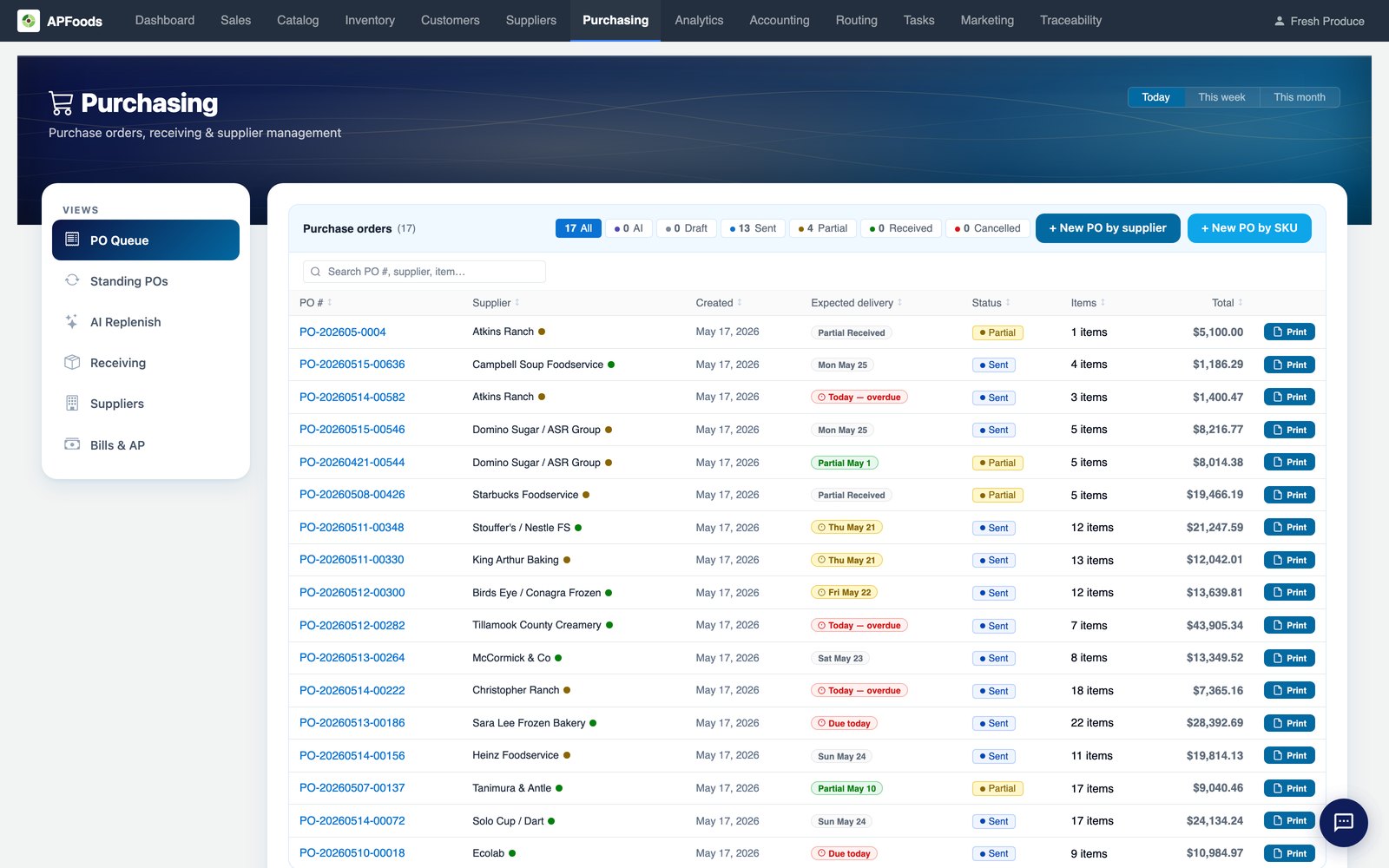
The buyer's spreadsheet is always a day behind the floor.
Reorder points in one place, supplier prices in another, and what actually arrived in a third. A buyer working from yesterday's export over-orders the slow items and runs out of the fast ones.
APFoodz builds purchase orders from live stock, open orders and each supplier's terms, and checks the bill against what was received.
What is in purchasing.
Two PO builders
By supplier, or a basket across suppliers by item that makes one PO per supplier.
Supplier prices
Dated contract price lists and per-warehouse prices, so each PO starts at the price you agreed.
Minimums and freight
Dollar, pound or case minimums and default freight with a free-freight threshold, per warehouse.
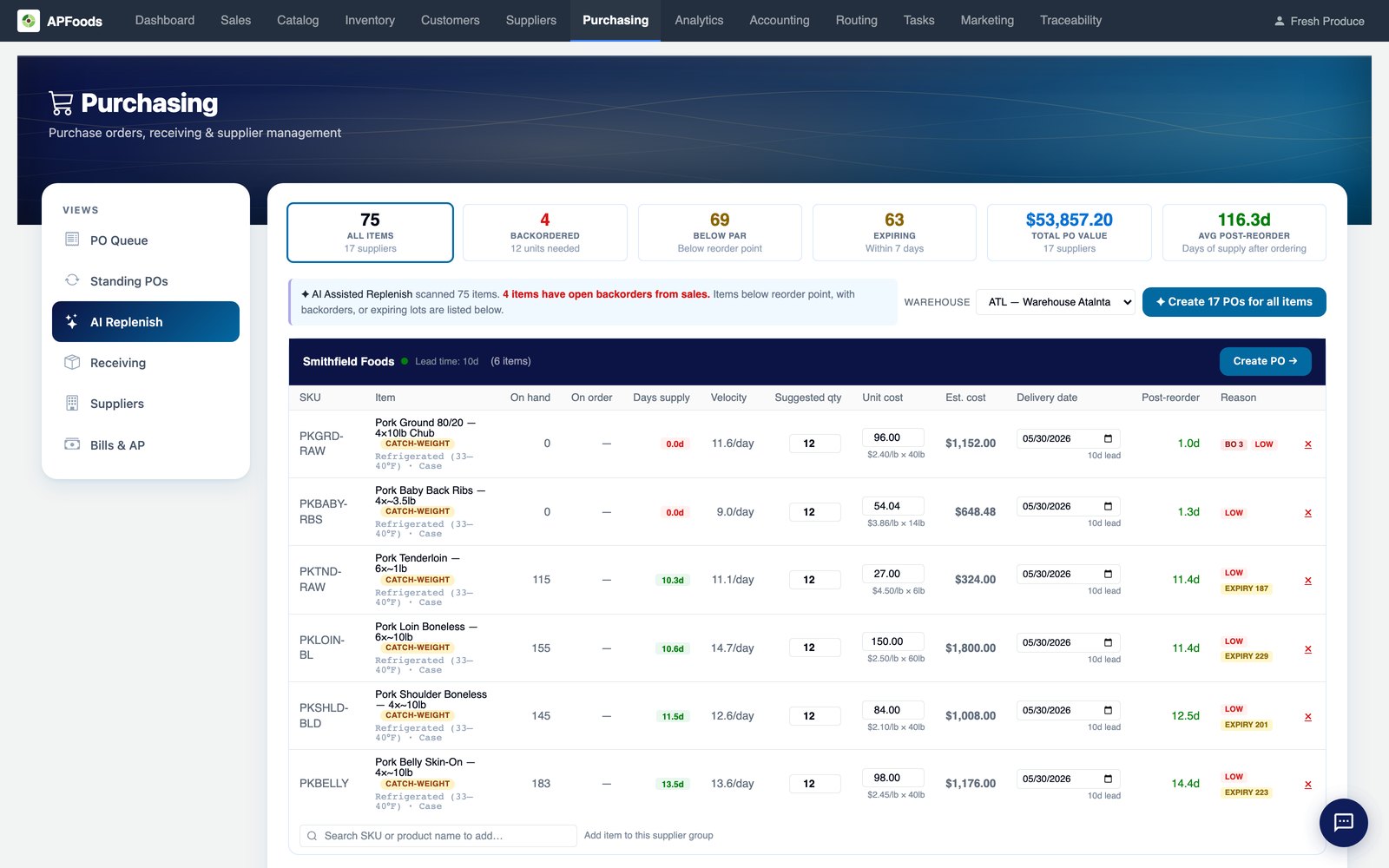
Replenishment suggestions
Items below reorder point, back-ordered or with stock expiring, sized from recent demand.
Standing POs
Recurring purchase orders drafted daily, weekly, every other week or monthly.
Back-order POs
Draft POs to preferred suppliers when a confirmed order runs short.
PO approval and amendments
Approval above an amount; every change to a sent PO kept as a revision.
Emailed with supplier SKUs
The PO PDF goes to the supplier with their own item codes.
Receiving
Pallet by pallet with lot, dates, weights and temperature, and overage rules.
Three-way match
Order, receipt and invoice compared within a tolerance before the bill is approved.
Landed freight
Supplier and carrier freight capitalized into the cost of the goods.
Unordered goods
Goods shipped but not ordered become a line on the PO and a task for the buyer.
What to buy, with the reason beside every line.
Suggestions are grouped by supplier with reason chips (low, back-ordered, expiring), the supplier's on-time record and lead time, and one click to draft the POs. Nothing is sent until a buyer sends it.
Purchasing & receiving: questions we are asked.
Does a match change our inventory cost?
Yes. An approved three-way match re-costs the stock still on hand to the invoiced price; the share already sold goes to purchase price variance.
What happens when a bill does not match?
Small differences within a set tolerance pass. A variance outside it needs an approver before the bill is approved.
Are suggested reorders automatic?
They are suggested from live stock, open orders and recent demand, and become draft POs only when a buyer creates them.
Terms on this page
Works with
Purchasing & receiving works with
See it with your own data.
A working session on your own items, customers and route days. Thirty minutes.
Get a demo